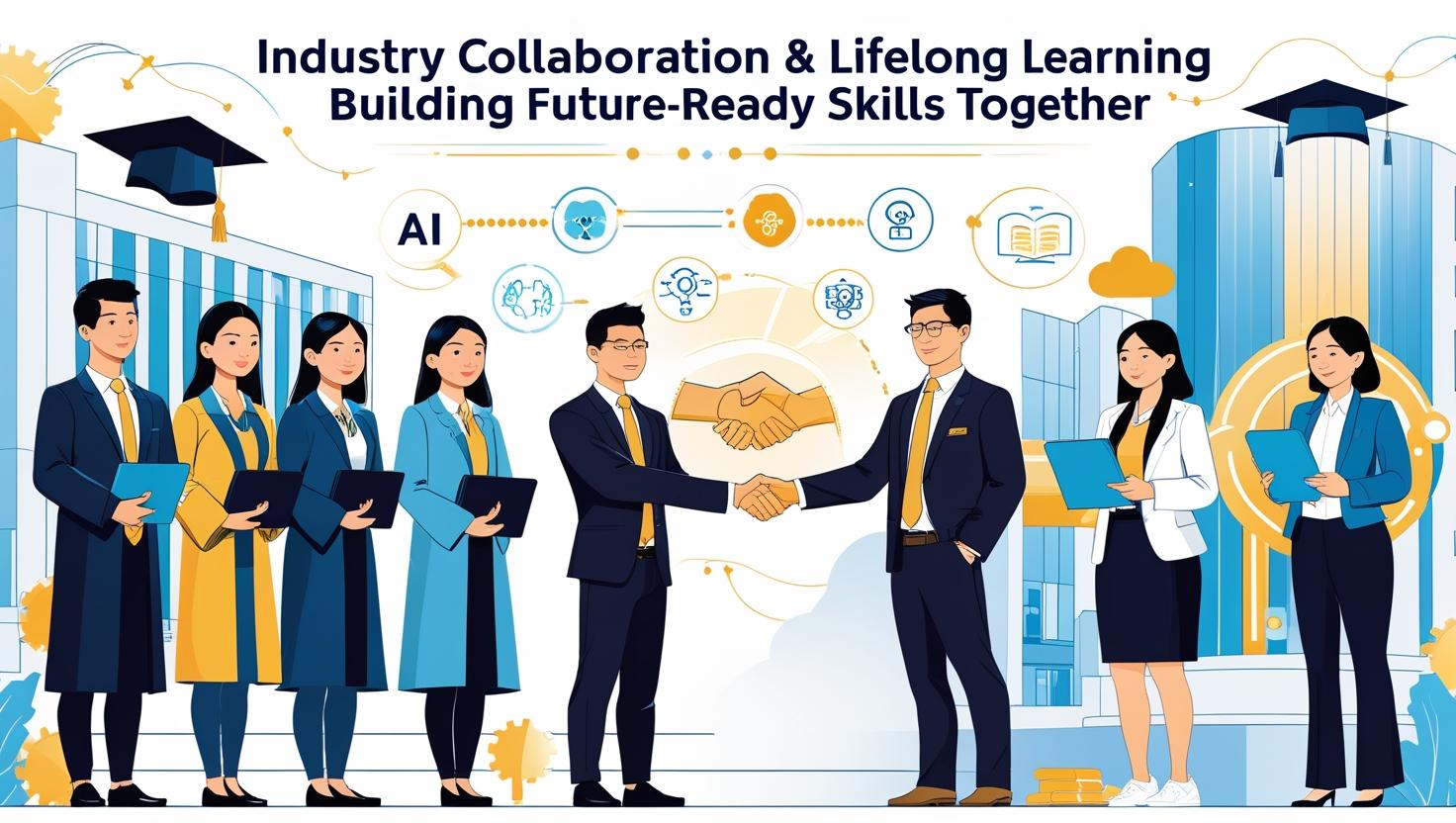
Industry Collaboration and Lifelong Learning
In today’s rapidly evolving world, the traditional boundaries between education and industry are dissolving. With technology disrupting careers and industries at an unprecedented pace, continuous learning has become not just an option, but a necessity. In this context, industry collaboration and lifelong learning are emerging as powerful strategies to equip individuals with relevant skills, ensure workforce adaptability, and drive innovation in education and business alike.
Why Industry Collaboration Matters
Educational institutions can no longer operate in silos. Partnering with industries allows them to:
- Align Curriculum with Market Needs: Industry partners provide real-time insights into current skills in demand, helping institutions design courses that are both relevant and future-ready.
- Provide Real-World Exposure: Internships, live projects, and mentorship from industry experts give students practical experience that enhances learning beyond textbooks.
- Boost Employability: Institutions with strong industry ties often see better placement records, as students are job-ready from day one.
- Co-create Innovation: Collaboration opens avenues for joint research, product development, and entrepreneurship opportunities.
The Rise of Lifelong Learning
Gone are the days when a single degree could serve an entire career. The shelf-life of skills is shrinking, and individuals must continuously evolve. Lifelong learning ensures that:
- Professionals Stay Relevant: Continuous upskilling and reskilling keep professionals in sync with industry trends and technologies.
- Career Transitions Become Easier: Switching careers, starting new ventures, or returning to the workforce after a break becomes achievable with the right learning tools.
- Personal Growth Accelerates: Beyond careers, lifelong learning enhances creativity, confidence, and adaptability—skills that are critical in today’s uncertain world.
Models of Industry-Academia Collaboration for Lifelong Learning
- Corporate Learning Partnerships: Companies collaborating with ed-techs or universities to provide employees with access to certification programs, bootcamps, or customized training.
- Work-Integrated Learning: Models like apprenticeships, cooperative education, and remote internships integrate learning directly into the workplace.
- Innovation Labs and Incubators: These serve as platforms where students, educators, and industry professionals co-develop solutions to real-world problems.
- Micro-Credentials & Stackable Learning: Instead of long-term degrees, professionals earn modular certifications aligned with evolving job roles.
India’s Opportunity – A National Priority
With the National Education Policy (NEP) 2020 emphasizing multidisciplinary learning, digital education, and skill development, India is poised for a revolution in education and employability. Initiatives like PMKVY, Skill India, and the Academic Bank of Credits encourage collaboration and lifelong learning pathways.
Startups, corporates, and academic institutions must seize this moment to forge partnerships, create learning ecosystems, and co-build India’s future-ready workforce.
The Future is Collaborative and Continuous
The synergy between industry and education isn’t just a trend—it’s the foundation of a resilient, innovative, and inclusive future. As industries evolve and job roles transform, the ability to learn, unlearn, and relearn will define success. Institutions that embrace lifelong learning and foster deep industry collaboration will not only stay relevant but lead the way forward.









.jpg)